Logo
  • Home
  • Facilitation
  • Innovation
  • About
Let's talk
Logo

Privacy Policy

Cookie Policy

©2025 MakeTeamWork V.O.F | KvK: 82225842 | Amsterdam, Netherlands. 📞 Give us a call: +31 687 24 5001

LinkedInInstagram

Innovation

‣
other items

How we can help

‣
Enhancing Employee Experience (EVP)

By conducting in-depth research on employee needs, motivations, and pain points, we’ve helped companies design meaningful employee experiences that boost engagement and retention.

‣
Improving Website/App Performance

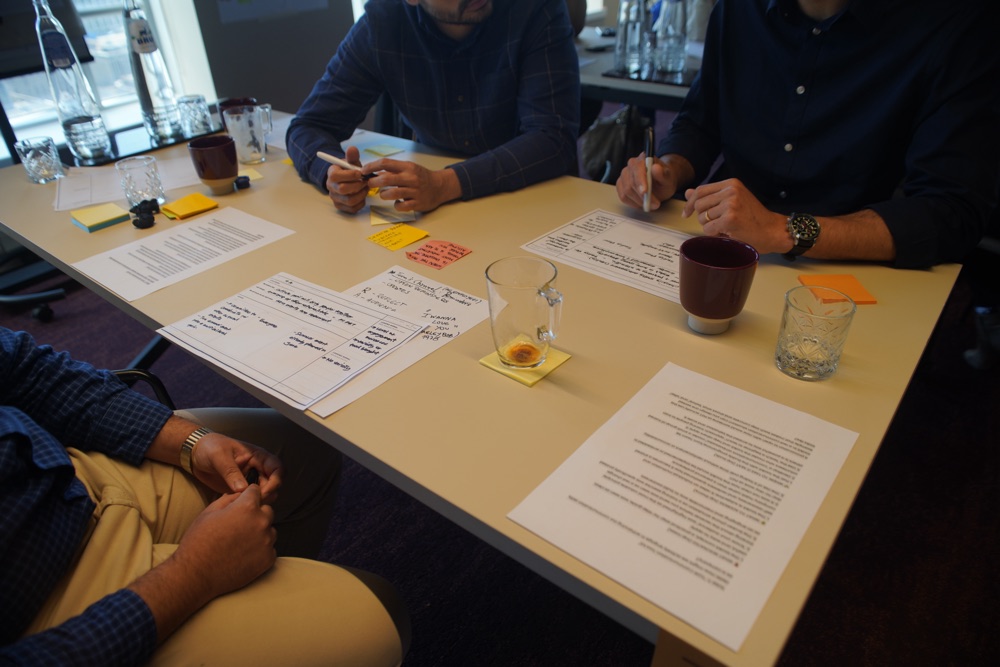
Through user testing, interviews, and journey mapping, we identify critical improvements to digital platforms, ensuring a seamless user experience and optimised performance.

‣
Launching & Relaunching a Brand

Our research uncovers audience perceptions and desires, enabling brands to craft messages that resonate and position themselves effectively in competitive markets.

‣
Designing & Redesigning a Service

We gather insights directly from users, allowing teams to redesign services that better align with customer expectations and market needs.

‣
Finding/Enhancing Product-Market Fit

By exploring user behaviours and market dynamics, our research helps companies refine their offerings, ensuring they meet real-world demands and achieve stronger product-market fit.

Asynchronous Collaboration project with Miro
Think-aloud testing for early-stage start-up

FAQ

‣
What is UX research, and why is it crucial for product/service development?

UX research is a systematic approach to gathering insights and understanding the needs of people and the context in which they use a product or service. It encompasses a variety of research methods that help inform the design process, ensuring that the resulting user experience is relevant and effective. The goal is to bridge the gap between innovation and usability by providing a foundation of knowledge that guides design choices.

As we move into 2025, integrating effective research methods is more important than ever to enhance user experience and spend money smartly. Decision makers and designers can better understand user needs and behaviors by utilizing insights from market research services provided by an experienced market research agency. This understanding enables teams to create innovative solutions during product development, ensuring they meet user expectations.

‣
What are the main design research methods used in 2025?

In 2025, several design research methods remain prominent, including quantitative and qualitative approaches. Common methods include user interviews, surveys, focus groups, usability testing, and card sorting. Each method serves a unique purpose, allowing design researchers to gather specific types of data that can enhance their understanding of user needs and preferences. By utilizing a mix of these methods, designers can improve the overall quality and effectiveness of the interaction design, product development, and user experience.

‣
What is the role of early prototyping?

Prototyping is vital in this journey, allowing designers to test ideas and gather feedback for iterations - saving money and time. Engaging with an innovation agency or a specialized research agency can further enhance this process, providing valuable data that helps inform design decisions and drive success in the competitive market.

deleted section

Some of our Research Projects

Krealo: CEO Innovation & Leadership Capability JourneyKrealo: CEO Innovation & Leadership Capability Journey
💪🏽
Krealo: CEO Innovation & Leadership Capability Journey
PGT: Building Innovation Capability Through Real-World ChallengesPGT: Building Innovation Capability Through Real-World Challenges
PGT: Building Innovation Capability Through Real-World Challenges
Chipax: Scaling Innovation MindsetChipax:
Chipax: Scaling Innovation Mindset
IBM: Ongoing Team Development LabIBM: Ongoing Team Development Lab
IBM: Ongoing Team Development Lab
Krealo: Building Innovation Leadership Capability Across a Venture PortfolioKrealo: Building Innovation Leadership Capability Across a Venture Portfolio
Krealo: Building Innovation Leadership Capability Across a Venture Portfolio
LUMA Institute Partnership: Human-Centred Design Capability BuildingLUMA Institute Partnership: Human-Centred Design Capability Building
LUMA Institute Partnership: Human-Centred Design Capability Building

Fueled by global collaboration

Our process, aimed at driving relevant insights and enabling fast experimentation, has been crafted in collaboration and learning with teams worldwide, including people from organisations such as Luma Institute, IDEO, Kantar and Hyper Island.

image

I learned how to use very effective methods that can be easily embedded in my day-to-day work.

Fang

image

The activities were super interactive and business-relevant. All participants were engaged, and before the end of the training, we planned how to use them in our projects.

Tom

image

I learned different ways of looking at the same problem to find a better solution. Problem-solving won’t be the same after this training.

Alice

image

The shift is not only from learning methods but also in my mindset. I already feel the change in how I think, feel and express myself in the team context.

Amir

image
image
image
image
image
image
image
image
image
image

Innovation Capability for Real Change

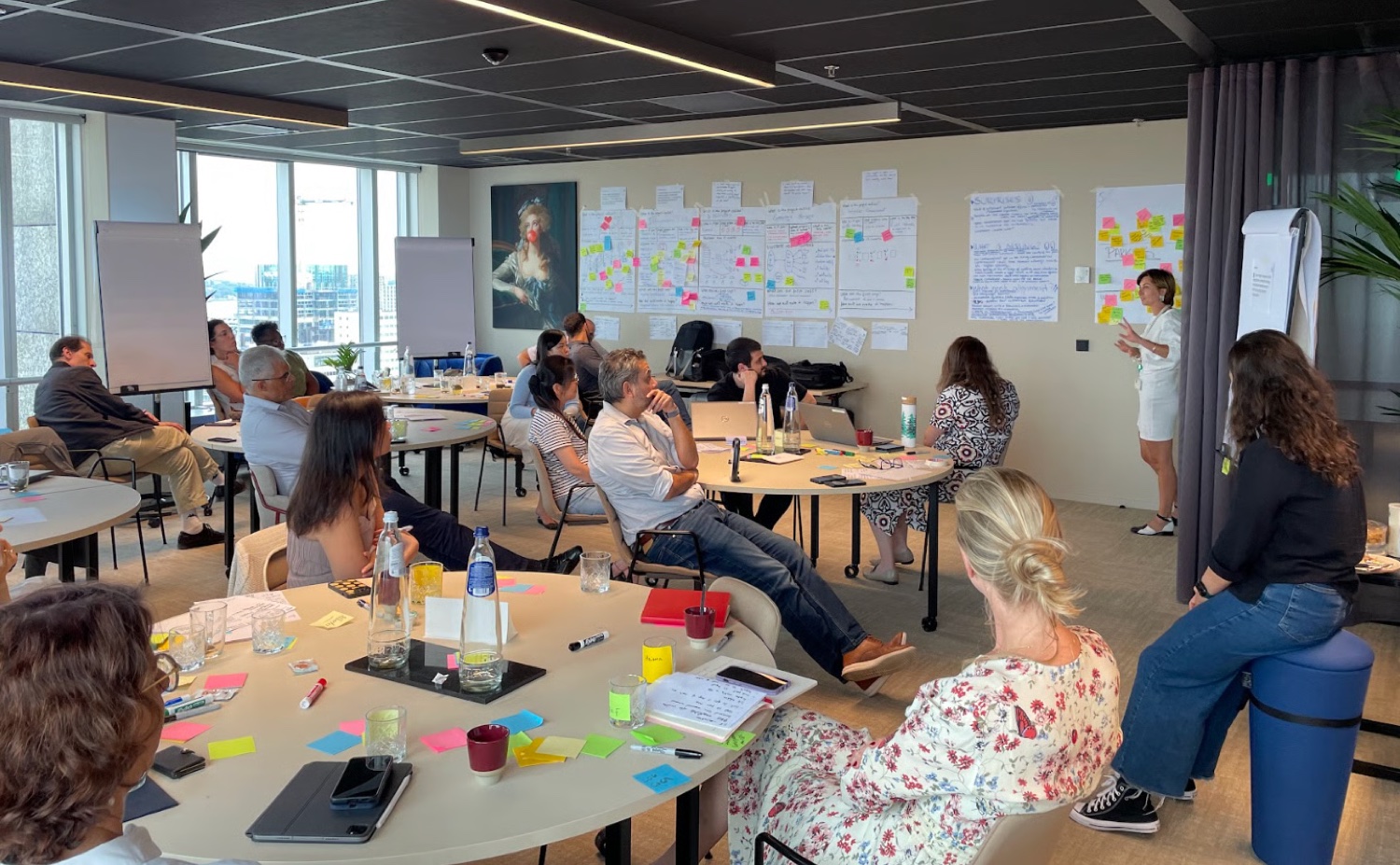
We embed applied human-centred design capability into organisations, enabling teams to navigate complexity and deliver sustained progress.

image
💬

“I wish I discovered these methods earlier in my career” — Fien.

Outcomes you can expect

  • ⁠Stronger and more confident idea exploration
  • ⁠Clearer prioritisation across teams
  • Stronger ownership of key initiatives
  • Tangible progress on real projects
  • ⁠More structured cross-functional collaboration
image

Our approach

Understand – We begin with focused interviews to uncover context, friction, and real constraints.

Apply – We work on your real challenges, not abstract cases.

Embed – We support adoption so new practices become part of daily work.

image

How capability is built in practice

1. Understand the System

Stakeholder mapping · Root causes · Systems view

2. Frame the Opportunities

Problem reframing · Ideation · Prioritisation

3. Move Toward Action

Prototyping · Testing · Pitches · Next steps

“Super interactive. Everyone could contribute and see how their input shaped outcomes.”

image

Why organisations work with us

‣
Structured and contextual

We apply proven human-centred design methods, adapted to complex organisational environments.

‣
Focused on adoption

Our work is measured by what teams continue using after the engagement.

‣
Grounded in real priorities

We work on live transformation challenges, not simulations.

‣
Experienced in cross-functional environments

We understand the dynamics of scale-ups, international organisations, and multi-stakeholder settings.

What our clients say

Capability Building Case Studies

PGT: Building Innovation Capability Through Real-World ChallengesPGT: Building Innovation Capability Through Real-World Challenges
PGT: Building Innovation Capability Through Real-World Challenges
Krealo: CEO Innovation & Leadership Capability JourneyKrealo: CEO Innovation & Leadership Capability Journey
💪🏽
Krealo: CEO Innovation & Leadership Capability Journey
IBM: Ongoing Team Development LabIBM: Ongoing Team Development Lab
IBM: Ongoing Team Development Lab
Krealo: Building Innovation Leadership Capability Across a Venture PortfolioKrealo: Building Innovation Leadership Capability Across a Venture Portfolio
Krealo: Building Innovation Leadership Capability Across a Venture Portfolio
LUMA Institute Partnership: Human-Centred Design Capability BuildingLUMA Institute Partnership: Human-Centred Design Capability Building
LUMA Institute Partnership: Human-Centred Design Capability Building
Chipax: Scaling Innovation MindsetChipax:
Chipax: Scaling Innovation Mindset

Applied Innovation Case Studies

Sportix: Enabling Coherent Customer Experience During Rapid Scale-UpSportix: Enabling Coherent Customer Experience During Rapid Scale-Up
Sportix: Enabling Coherent Customer Experience During Rapid Scale-Up
Miro: Enabling App Discoverability through Shared UnderstandingMiro: Enabling App Discoverability through Shared Understanding
Miro: Enabling App Discoverability through Shared Understanding
Goldenline: Applied Innovation under Market DisruptionGoldenline: Applied Innovation under Market Disruption
Goldenline: Applied Innovation under Market Disruption
image

Get in touch with us

FAQ

‣
What kind of innovation programs do you offer?

We design capability programs that embed structured human-centred design into real organisational work. This can include: •⁠ ⁠Leadership-aligned capability tracks •⁠ ⁠Cross-functional transformation sprints •⁠ ⁠Applied problem-solving programs •⁠ ⁠Coaching of internal change or innovation leads We focus on building internal competence — not delivering isolated workshops

‣
Can we work on real strategic challenges during the program?

Yes. In fact, we insist on it. Capability is built through application. Teams work on live priorities — product, service, transformation, or cross-functional challenges — from day one. This ensures progress is not theoretical.

‣
How long does an innovation capability program typically last?

It depends on ambition. Typical formats include: •⁠ ⁠Focused 1–2 day applied intensives •⁠ ⁠Multi-session programs across 4–12 weeks •⁠ ⁠Leadership-embedded transformation tracks We scope programs based on complexity, stakeholder landscape, and desired adoption depth.

‣
Who should be involved?

The highest impact comes when: •⁠ ⁠Decision-makers are aligned •⁠ ⁠Cross-functional contributors participate •⁠ ⁠Internal sponsors take ownership of adoption Capability building is most effective when leadership signals commitment.

‣
How do you measure impact?

We measure impact in three dimensions: 1.⁠ ⁠Progress on real organisational priorities 2.⁠ ⁠Adoption of structured methods in daily work 3.⁠ ⁠Increased ownership and clarity across teams Where relevant, we define baseline indicators at the start — such as alignment quality, prioritisation clarity, or decision velocity.

‣
Do you also run standalone workshops?

Yes — when appropriate. However, our core focus is embedding structured capability that lasts beyond a single session. If your goal is inspiration only, there may be other providers better suited.

‣
Are you a consulting firm?

We are not a traditional consulting firm delivering external solutions. We design and embed structured problem-solving capability so your teams can navigate complexity independently and with confidence.